
More than half a century ago, the world watched with bated breath as humans took the first steps on the Moon. The thrill was short-lived, however; just three years, six spaceflights, and twelve moonwalkers later, the Apollo Program had drawn to a close. Since humanity last stepped foot on the moon, the Cold War has ended, cable TV, personal computers, and the Internet were created, and a new century began. The world that bore witness to the moon landings has grown unrecognisable, yet no further moon landing attempts were made…until now.
The Artemis Program
In Greek mythology, Artemis is the twin sister of Apollo, and the goddess of the Moon (among other things); a fitting name for its mission: reestablish human presence on the Moon and lay the foundation for future deep space travel.
Here is everything you need to know about humanity’s next big space project!
Started in 2017, Artemis aims to bring humans back to the moon, permanently. Additionally, it would be the first major step towards human exploration of Mars. From a new spacecraft configuration to the very first lunar space station, everything about the Artemis program is geared towards its goal of sustainable and innovative lunar exploration.
The Rocket: Space Launch System
Evolved from the Space Shuttle program, the Space Launch System (SLS) shares many similarities with Space Shuttle launchers. However, while the space shuttles were designed to carry astronauts into low Earth orbit, the SLS is designed for deep space travel.
In early missions, SLS Block 1 will be used. From Artemis IV onwards, a more powerful variant, Block 2, will be used. SLS Block 2 has nearly double the payload capacity and will be pivotal to accomplishing many of the Artemis Program’s goals. The SLS has many variants to accommodate all types of cargo and spacecraft and is designed for a multitude of missions.
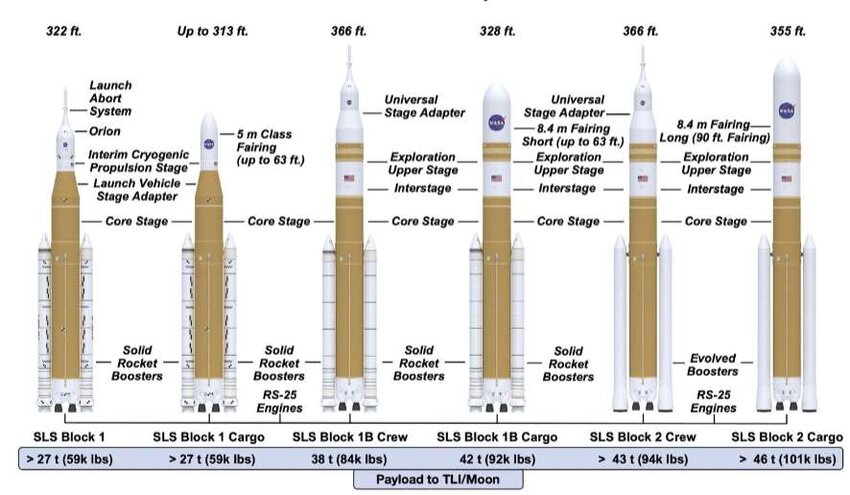
Credit: Shah, Krish & Shah, Parth
The Spacecraft: Orion Spacecraft
The Orion spacecraft sits atop the SLS during launch and will be the main payload in all Artemis missions. This is where the crew live, sleep, eat, and navigate through the void of space.
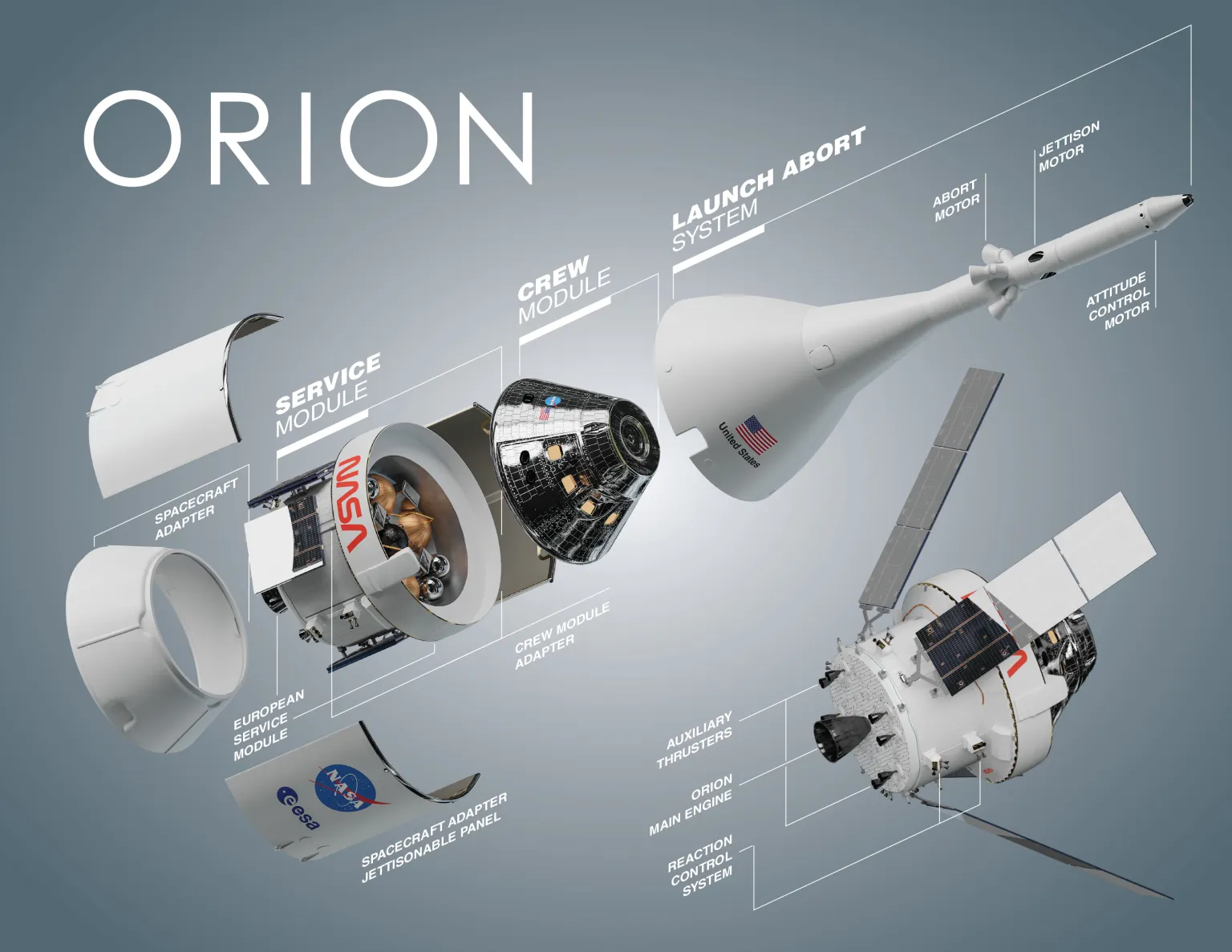
Orion, like Apollo, consists of three main components: the Launch Abort System (LAS), the Crew Module (CM), and the Service Module.
The tall, thin structure atop the spacecraft is the LAS. As the name, Launch Abort System, suggests, it provides the astronauts with a quick escape should anything go awry during launch. Like the LAS on the Apollo, it will detach from the spacecraft as soon as the launch has succeeded. Unlike the LAS in Apollo, this new LAS can control its orientation to more effectively pull the crew to safety.
The CM houses the crew for most of the mission. It is also the command centre, from which the crew can steer the spacecraft. The Orion CM has 60% more space than the Apollo CM and can house up to our crewmembers, rather than three. Additionally, with a waste management system and an in-built exercise device, it is designed for longer missions. Orion can sustain a crew of four for up to 21 days—an entire week longer than on the Apollo CM.
Lastly, powering it all is the Service Module (SM). It houses the necessary equipment to support the CM and will accompany the CM up to entering Earth’s atmosphere. Temperature control, propulsion, electrical power, and life support are all provided by the SM. Electrical power is generated by four solar array wings, a vast improvement in sustainability from the hydrogen and oxygen fuel cells used in Apollo.
The Lander: Human Landing System (HLS)
In the Apollo missions, the Lunar Module—the vehicle used to land, house the crew, and lift off from the Moon—was attached to the spacecraft before launch and brought to the Moon with the crew. In Artemis, however, the landers will be sent to the Moon separately, and a rendezvous will be performed in lunar orbit. Two of the four crew members will board the lander, descend onto the lunar surface, and, after the exploration, use it to return to the Orion spacecraft. In addition to crew, the landers will also be used to deliver cargo and other equipment, such as rovers and habitats, to the Moon.
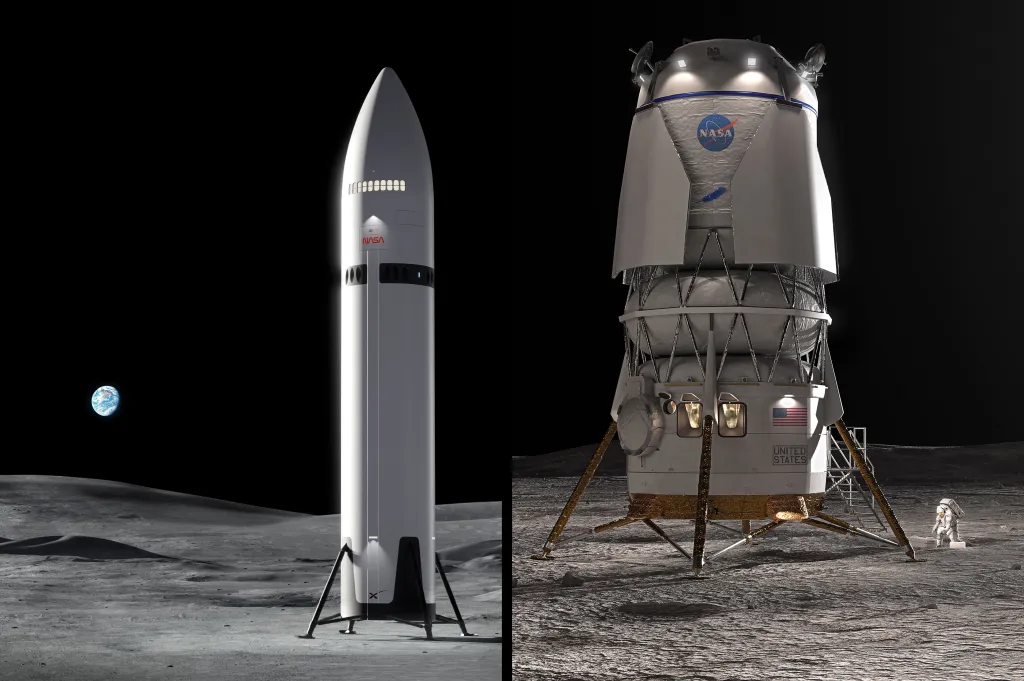
Credit: NASA
The first lunar space station: Gateway
Possibly the most exciting aspect of the Artemis Program: the very first lunar space station. Gateway space station would serve as an outpost and support lunar missions, playing a vital part in a sustainable lunar exploration program.
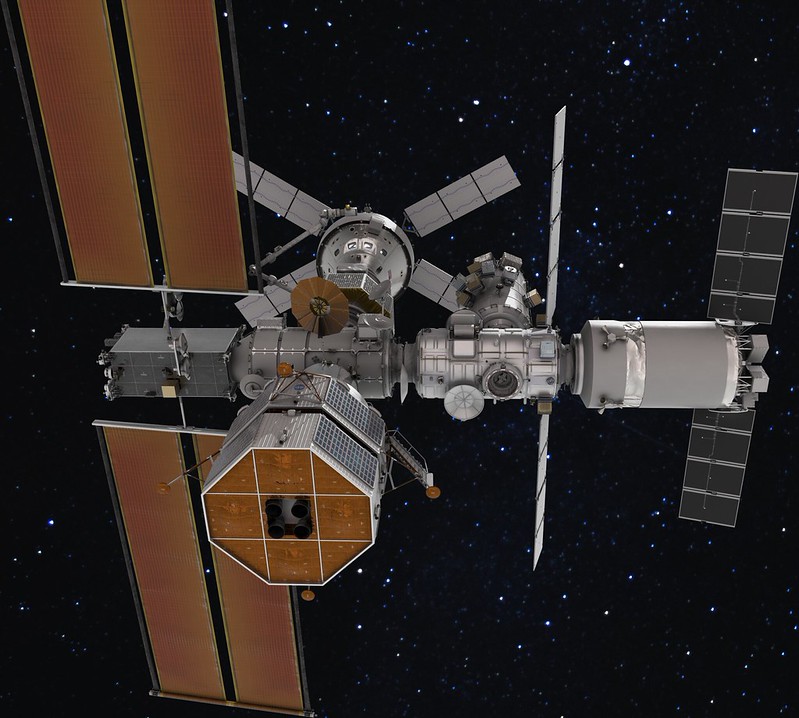
Credit: NAS
Gateway will be in a near-rectilinear halo orbit (NRHO). Unlike the low lunar orbit used in the Apollo mission, this orbit allows continuous communication with Earth, is fuel-efficient, and brings the space station close enough to the Moon for moon landings and ascents.
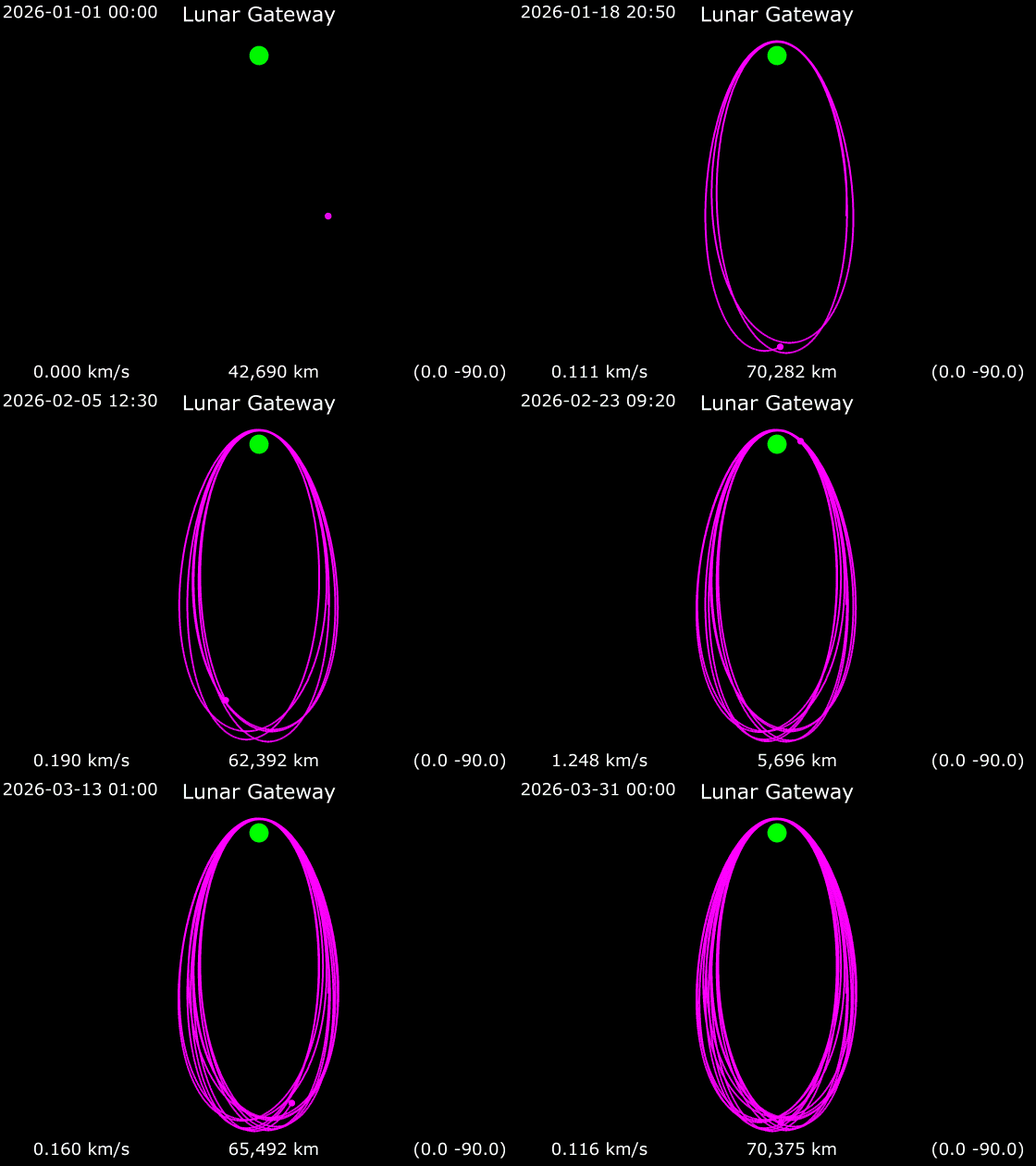
By Phoenix7777; Wikimedia
Unlike the International Space Station, Gateway will be far outside the Earth’s protective magnetic field and hence exposed to cosmic and solar radiation. This allows for a clearer understanding of space weather in deep space.
Keep your eyes peeled
Set to launch this year (early April, as of the writing of this article), Artemis II will be the first crewed Artemis mission. A lunar flyby, the crew of four will travel farther from the Earth than any previous planned space mission. The mission aims to put Orion and the SLS to the test on their first crewed mission, as well as investigate space weather and the effects of deep space travel in order to better prepare for future missions.
Artemis III, originally planned to be the first moon landing of the Artemis program, was very recently changed to a low Earth orbit flight test set to occur in 2027. The first moon landing attempt will be Artemis IV instead, which is set to launch no earlier than 2028, followed closely by Artemis V in 2029. Needless to say, we are currently on the precipice of a very exciting new stage in space exploration.
Written by Chloe Lim
28 Feburary 2026
References and further readings:
NASA. (2026, February 27). Artemis – NASA. https://www.nasa.gov/humans-in-space/artemis/
NASA. (2026b, January 26). Space Launch System (SLS) – NASA. https://www.nasa.gov/humans-in-space/space-launch-system/
Orion Spacecraft – NASA. (n.d.). NASA. https://www.nasa.gov/reference/orion-spacecraft/#hds-sidebar-nav-1
Human landing Systems – NASA. (n.d.). NASA. https://www.nasa.gov/reference/human-landing-systems-2/
NASA. (2026a, January 8). Gateway – NASA. https://www.nasa.gov/mission/gateway/